Showing posts with label drama. Show all posts

Saturday, March 12, 2016

Using free technology to start a drama in the classroom

I love environmental issues, technology and drama, so mixing them up is something that makes the curriculum come alive for me. This week my class will become The Asian Elephant Rescue Centre (The ARC), based in the rain forest of Borneo. The first dilemma that will start us off is that a baby elephant has fallen into a water pit and is unable to get out. The mother is so distressed that she is charging at anyone who comes close. This will create opportunities for thought tracking, pupil in role, decision alleys and role on the wall.


As always, when  I am planning for mantles such as this, I have an idea about what I want to do, then I search google to see if anything exists that I can use (and pretend to be mine). There usually is! This time I have found video footage of a charging Asian elephant and a bay elephant stuck in a pit in China. Perfect! I can adapt those.


For the baby elephant footage, I have used screencast-o-matic to make it sound like I am recording the elephant myself. It's not perfect, but it will do. 


For the charging elephant I will use a video straight from Youtube, which I have downloaded to my computer using the ss trick as we can't access Youtube in school... 


A bit later in the 'story' I will use a news page, adapted using x-ray goggles, to help make the news our own. I am considering teaching my class to use this, but they may be a bit young. 


Something I will definitely use during this mantle is Doink green screen app. The children can record themselves as if they are in the rainforest,  near to the baby elephant, or the charging elephant. Of course they will be told that this is all in our imaginations. In my experience, my children have been disappointed to learn that things aren't real when we first start using drama in September, but by this point in the year they understand that we are using our imaginations to make our learning exciting. History (The Great Fire of London and Florence Nightingale topics) has been particularly popular.

Planning the smart way?

It has taken me under fifteen minutes to find and prepare the films, then about the same for the hacked news page. I will also practise using Doink at school, where I have some green fabric tucked away. The value in doing these for me is that they help focus my thoughts on where the mantle will go, to start off with. The children will guide the rest of the way. The point is that I have planned for a unit of work quickly, in a practical way, which is how I prefer to work. I have a 2 minute mindmap on paper and I may complete one using popplet (I will add it here if I do), but I won't have a detailed plan. I have the objectives in my copy of my class's curriculum for 2015-16, which I will highlight and date. Minimal paper plans, but lots of planning will take place throughout. Most importantly (in my opinion) is that I am excited about teaching this and I really believe that excitement and passion is picked up on and replicated by the children. We will cover geography, art, DT, ICT, PSHE/citizenship and English in this unit. Can't wait!

Wednesday, March 4, 2015

Polar bear iBooks!

I published this on this blog instead of my class blog by mistake today. My class ipad was plugged into the IWB, so I used mine to capture the children at work. I've decided to keep it on here as well as it shows two of my passions happening in the classroom - ICT and drama. We are PEACE at present, with a huge dilemma of saving some stranded polar bears. 


We have jumped back in time to a few years bcak when we all had to undergo staff training about polar bears. To pass the course, we all had to create quality iBooks. You can see the other drama activities on our class blog. This is the post on the class blog (minimalist - a picture says a thousand words!!)


The staff training is coming along nicely and all PEACE employees are well on their way with their polar bear iBook assignments.


Sunday, March 23, 2014

Owl cam and mantle of the expert

Bressingham Bertie (well that's what I call him)

So my owl addiction has returned ...

The Lopham and Redgrave cam isn't running this year, so I asked my class governor (who just so happens to be a cameraman for the RSPB) if he knew of one and bingo! Barn owl cam courtesy of Somerset Wildlife Trust. I feel many hours will be spent watching ...


I am recording all my owl sightings again this year, though a new school route means that I haven't seen as many. It's lovely to hear that numbers are rising again in Norfolk.

There is a purpose to the owl cam beyond my love of this creature. I am about to embark on a nocturnal animal inspired mantle again. It will be a tweaked version of something that I have done before that the children loved. What follows is taken from my blog short stories from the classroom (which I no longer write on - it's all here now) and is a synopsis of the mantle.


This mantle was with year 2/1 children as a voluntary organisation called WPIT. The learning was mostly to prepare the children for KS1 stats; I wanted to show how a creative approach can still deliver the results you want.

They had a bit of job to do when they received a letter from a member of the public who was a fellow nature lover. Mrs Jones stated how she was disappointed with the website, that there wasn't a lot of information on it.


 So the volunteers set to work rectifying this and made a good start gathering their information. Now they just have to wait for the website volunteers to get it all on the site. Take a look at it by clicking on the webpage here:


The mantle also involved imagining that we were responsible for setting up the webcam at Lopham and Redgrave fen (a local place).


You can click on the picture to go to the live webcam and watch the owls! 
We imagined that as part of our work  we put up the owl box and put the camera in place. We loved seeing how our owls were getting on!

Another big dilemma came when we had a request from backwoods Billy Baxter. The film clip worked out so well, that I was able to pretend to talk to him on the phone at the end. This was a jaw dropping moment for my class! (Though I couldn't play that part of the clip again!)


Backwoods Billy Baxter was a famous nature film-maker, who came all the way from Australia to find out about nocturnal animals. Unfortunately he was unable to catch any on camera! So the expert volunteers at WPIT decided to give him a bit of advice. They should know, they've been watching wildlife for a long while now. 

They decided to make a guide book too, to show Billy what he's actually looking for. After all he's probably more used to crocs and koalas! Some of the volunteers came up with some top tips to help Billy. 


Tip 1
Tip 2

Tip 3


Tip 4

Tip 5

Tip 6

Tip 7

Tip 8

Tip 9


This mantle was quite exceptional, in that we had a response via our class blog from a real Australian nature lover! You can see the blog here. We learned passed on more good tips to Billy, like having heat sensitive cameras to film wildlife. 

WPIT set to work making some ibooks on the ipads to help Billy identify the animals.


Ibooks for Backwoods Billy Baxter on PhotoPeach


The next dilemma came when poor old Billy had a bit of an accident ! This helped me deliver learning about being seen at night. The clip shows how Billy went out on his bike at night to look for some urban foxes, but fell off and hurt his wrist! Poor Billy! 

As we weren't sure exactly how it happened, some great discussions were generated about why he might have fallen off his bike. We thought he might have hit a log in the road, been hit by a car reversing out of a driveway, knocked off his bike by a fox and lots of other things! We also did some thought tracking about his feelings and decided he probably wasn't very happy about what had happened. Poor Billy.

Thought tracking


We thought of some top tips for Billy to be safe and be seen, then created some advice posters.


Here are some of the children's posters with sound advice for Backwoods Billy Baxter. 

Be Safe Be Seen Billy! on PhotoPeach

Backwoods Belinda

The children were enjoying being in role so much I wanted to keep taking the learning forward, but felt like I couldn't keep asking Billy (a fellow teacher called Mr Ringer) to keep creating films for me. Luckily, it turned out that Billy had a team mate called Belinda! (It was about time I dropped into the drama in role). Belinda was behind the camera when working with Billy, because she is a much better 'cameraman'! That was the response I quickly came up with when I was asked why I wasn't in any of the films.
So Belinda arrived, with a very dodgy Australian accent a bag of owl pellets and some bone identification charts. In role, I asked the children (as WPIT) to help me identify the animals that must be in the woods, from the owl pellets. It was a wonderful afternoon with all children engaged in investigating and identifying bones. 


Tuesday, February 25, 2014

BB's Bizarre Beasts


This is a quick synopsis of a mini mantle that incorporates 4 days of maths and English. We became a Pet Company called BB's Bizarre Beasts, because children love animals and who couldn't be compelled to learn about these weird and wonderful creatures. Many of you who know me will be aware that the planning is sketched in my head and that I feel that writing it down comprehensively is a pointless exercise. I'd much rather put the time and energy into resourcing and enhancing my ideas - or sharing them! So hopefully these resources will inspire you!

The learning objectives are:


Identify and record the information or calculation needed to solve a puzzle or problem; carry out the steps or calculations and check the solution in the context of the problem

Solve problems involving addition, subtraction, multiplication or division in contexts of numbers, measures or pounds and pence

Recognise all coins

Halving


When we became the pet shop I put on my work apron and cap, put my notebook and pen in my pocket and introduced myself as the proud owner of Bizarre Beasts, the best pet shop in the universe. I talked about all the creatures in our shop before playtime and shared little stories about them (trivial facts like what they ate, where they lived, who they lived well with). This took about 10-15 minutes.
I debriefed them afterwards, as some of my children were saying 'Is this real?' They needed to know that my stories were in my imagination and that it would be cruel to keep wild animals in a pet shop. My class liked the idea that we were using our imagination this way. After play, before we dropped back into the drama, we had a quick white board maths session when we thought about how we drew 'stories' to solve problems. We practised the skills we needed before the drama; problem solving is a whole class target and I wanted them to have their memories jogged about some familiar strategies. 


 In preparation for after play I had blue-tacked some of the animals around the room, with trickier problems where the higher ability children sit in class. When we became the pet shop again, I told the employees that there were lots of problems to solve in the pet shop today and that I needed their help. My class set off to work together to solve the problems, with a real buzz. They could work where they wanted. I asked some employees to work with me and help me solve the problems. The employees had activity sheets to write their answers on and were aiming to get a 'pay rise' for their hard work (they worked well to that incentive!)

The same activity sheets have been adapted for tomorrow, when unfortunately one of our Swedish employees has been giving the wrong change. I have written the cost of each animal in the end column and the children have to show the coins that are needed to pay, so that these posters can be displayed near the shop till. Mid ability children will show 2 different ways for each price, high ability at least 3 different ways of paying to help our Swedish employee. This will lead on to giving change from 20p, 50p and £1. 

Before they drop into the drama, they will have a quick maths skills practise, so that I know that they have the skills they need before they go off. This will consist of coin recognition and paying amounts, which will be no longer that 15 minutes. There are ways of doing this within the drama and I have considered jumping back in time to when all the new employees from other countries had money training, but I have an observation tomorrow and I am wary of being overly dramatic!


The last maths activity will be when we have the dilemma of not making enough money to pay the employees. The solution - half price sale!


For writing activities we are adding some descriptions of creatures to put by their tanks (this downloads better than it looks online)  and some persuasive posters for our half price sale. 


Saturday, February 15, 2014

Maths stories

I have enjoyed teaching maths through mini mantles before and my children have risen to many challenges. My favourites were Swift Air, Nature Park and of course Chadbury's chocolates. I will share a brief synopsis of each. The links will take you to class blog posts, but be warned they may be a little vague!

Swift air


Swift Air announce new flights and holiday packages from Norwich International airport. Cue lots of problem solving with money and time. Swift air had to respond to customer requests and produce itineraries for them, which were carefully priced. Some were on offer at 50% off (year 4/3 set) and the G&T children had to calculate time zone differences. If you look closely at the photo you will see how the children were working with large amounts of money, then writing their responses to the customer phone calls (on the pink paper).

Party Planners and Chadburys chocolates

There are a range of possibilities when you become a company like Chadbury's chocolates and mine went far beyond the daily maths lesson. You can read about the full mantle here, which involves a giant problem!


I have used the theme of Chadburys for other maths too, such as data handling, designing boxes, weights and measures and also incorporated it into Party planners, who take customer orders and fulfil them! A great mantle for Easter.


Childerwood Nature Park

After a lottery award (we needed to problem solve with money) the Nature Park folk decided to spend money on a new adventure playground, before designing and creating more animal pens. This covered shape, space and measure (including area and perimeter) as well as a lot of problem solving and calculating. Of course collaborative working was another key skill.


In KS1 I have used maths stories more, though maths has crept into many other mantles, such as when we have had to measure polar bears in order to transport them in trailers and design and create things like fire engines, wheel barrows for Percy the Park Keeper and feeding platforms for orangutans. There have been many occasions when grid references, position and direction have been included and their have been many opportunities through geography and science to practice basic maths skills.  It puts the maths into a context, therefore giving more meaning.

As a KS1 teacher I have looked for stories that support mathematical understanding too. There are many! I have used the obvious (How Big is a Million?, 365 Penguins and Olivers Vegetables etc are great), but have started to look for others. I won't reinvent the wheel, but thought it would be useful to collate a bank of resources so that I don't have to keep dearching for them. here are some I've found. Please leave a comment with links to your maths stories posts or favourite resources. I love using other folk's successful ideas!

Maths from stories a great book list, mind maps linked to books and plans for different year groups can be found here. A useful resource!

Maths Stories lots of links to maths resources, not just from books

Gingerbread man themed maths

Maths Contexts you have to have a Norfolk nsix account to access these

Maths Story  has stories, poems and songs from the USA

And of course it wouldn't be complete without a great Pinterest page (thanks to Jan Pringle)

Please share your maths stories!


Sunday, July 14, 2013

The Arrival

Last week I visited a school that I has worked with before, to support new staff with teaching through the mantle of the expert approach. It was a great day, not just because of the drama activities, but because of the great educational debate that followed the two sessions that I delivered.

I had been asked to work with year fives in the morning and year ones in the afternoon. These are both ages groups that I have a lot of experience teaching, predominantly through a dramatic enquiry approach. the challenge was to deliver something that could be started and ended quite quickly. Instead of using something I had done before, I decided that I wanted to use Shaun Tan's book 'The Arrival' as my hook. So here follows a description of the first lesson.

The children sat in a circle in the hall and I began a story of a boy who was sitting in a busy building, in a city, watching a suitcase. I placed an old brown leather suitcase in the middle of the circle of children and continued to describe how he could see that the suitcase had been left unattended and was intrigued as to what might be inside, so making sure no-one else was watching the case, he picked it up and casually left the building. He walked to a nearby park and sat on a bench. The case was locked and he had his second dilemma. Should he force the lock and break into the suitcase? His conscience had split and the good morals his mother had given him were saying don't open the case, but the inquisitive side was saying 'do it'.
At this point I asked the children, 'What if you were his conscience-what would you be saying?' They took it in turns, contributed ideas and made some pertinent observations. A brilliant conscience alley followed, with quite an even split between opinions. Incidentally, with younger children the majority have wanted to open a bag/case before hearing reasons against it. Their curiosity far exceeds any caution. That said, there was still a slight majority who wanted to open the case with this year five group. The way that I had planned this mantle, it wouldn't have mattered either way.

After they had decided I then asked about the thoughts and feelings of the person who had lost the case, so we did a very brief thought tracking. I then invited the children to return to class.

As soon as they were in I said 'Thank you detectives for joining me in the incident room, we have a new mystery to solve'. I hadn't had a lot of time to prepare for this session, so took a few short cuts. The contents of the case had to imply that the owner had a family and was poor. The actual contents of the case were Florence Nightingale props from a previous mantle, so we couldn't physically open the case. If I had time I would have hunted around charity shops for appropriate props, but what I did turned out to be just as effective. I had written 'Incident Board' on the white board and proceeded to stick up exhibit a, b, c etc which were laminated pictures of the contents of the case.


This included a tie, braces, a shirt, a man's hat, grooming kit, bar of soap, pyjamas, socks, pants, vest picture of wife and child and a letter. All the pictures of clothing were 1940s style. I talked about how the case had been found in the park, with the lock broken and these were the contents that were left inside. I then asked the detectives to consider the facts, then write their thoughts ready for a meeting in 15 minutes. This was an inference and deduction session and when asked afterwards they were clear about this, even though I had given no learning objective.

The children had a 'Missing Person' sheet to write thoughts on and an iPad for each table. The discussions, reasoning and ideas grew throughout the session. Fortunately there were other adults in the room that had come to watch the session and they helped push the children along to start with. As they had not worked in this way before (the teacher explained how he scaffolds by modelling skills) they needed a little push to start talking to one another and to consider the facts and what they might mean. Once they warmed up they quickly decided that google translate would help them decipher the letter and they talked through what the objects in the case implied. On a couple of the tables the children had became confused about the lack of trousers in the case. This was good and the discussions they were having were amazing. I had deliberately left them out as in my story he is poor and is wearing his only pair. I wondered what the children would make of it. They considerd many ideas, though came up with two final ones-that it was an overnight cases or that indeed, the owner was very poor. Before the letter was translated some considered it was from the wife and had been written in a hurry, or whilst she was dying of a war wound. Remember, they had no other visual images other than the contents of the case. They were listening to and building on other children's ideas.

After 15 minutes we had a meeting where the detectives shared their ideas. Some had successfully translated the letter and some great inferences and deductions had been made, based on wars, death of family, need for work and other themes. thought their reasoning was amazing from the few facts that they had been given.

I then told the detectives we were jumping forward in time to two days later. I started to create a timeline on the board, made up from various pictures from Tan's book. I told the group how they had been back to the park and spoken to many people nearby, especially at the immigrations building and the docks. The pictures showed a narrative that could be interpreted in different ways, and here is how the session ended. If it had carried on, a piece of writing could have followed depending on what the teacher wanted to achieve. For example, it could have been a letter back to the child describing the journey, or a diary entry, or the stories of other people in the pictures. I would have created a tableaux of the people on the boat, probably have done some sound-scaping and maybe some emotion tracking. This book lends itself to many possibilities.

After the session we had a very fruitful discussion about this way of teaching, Gove's curriculum and the expectations of OfSTED. I cannot recount all the details here, but I thoroughly enjoyed the challenging questions and the professional debate that ensued.

The afternoon session with the year ones was a potted version of the Fairytale Travel Company, which you can read here. The great thing abut this session was that one of the teachers said it proved to him how you didn't need to model all skills, that he was amazed at how I had given the children the tools and the expectations - and they achieved them, easily. He compared how he would have taught it with what he had witnessed and was 'blown away' by how his ideas were being challenged. I know that I saw someone moving from a fixed to a growth mindset. In fact all of the teachers that I worked with were open to change and desperate to provide the best education for children. When they told me about their working hours and the time and effort that they put in, it made me feel immediately cheesed off about the slating that teachers get, especially Norfolk teachers at the moment. In this one school I had just worked with four dedicated and passionate teachers and it feels great that what I did with them had a positive impact.

Tuesday, October 30, 2012

Mantle of the expert - deceiving children or inspiring learning?

I have been teaching through the mantle of the expert approach for seven years now, having first seen it in action at Little Bealings Primary School. I had heard about it in passing from my headteacher and curiosity got the better of me, so I convinced him to send three teachers from school to an open event at Bealings. Our trio consisted of myself (trying to find my niche), our deputy head (and English coordinator) and a new teacher who I had mentored as an NQT.

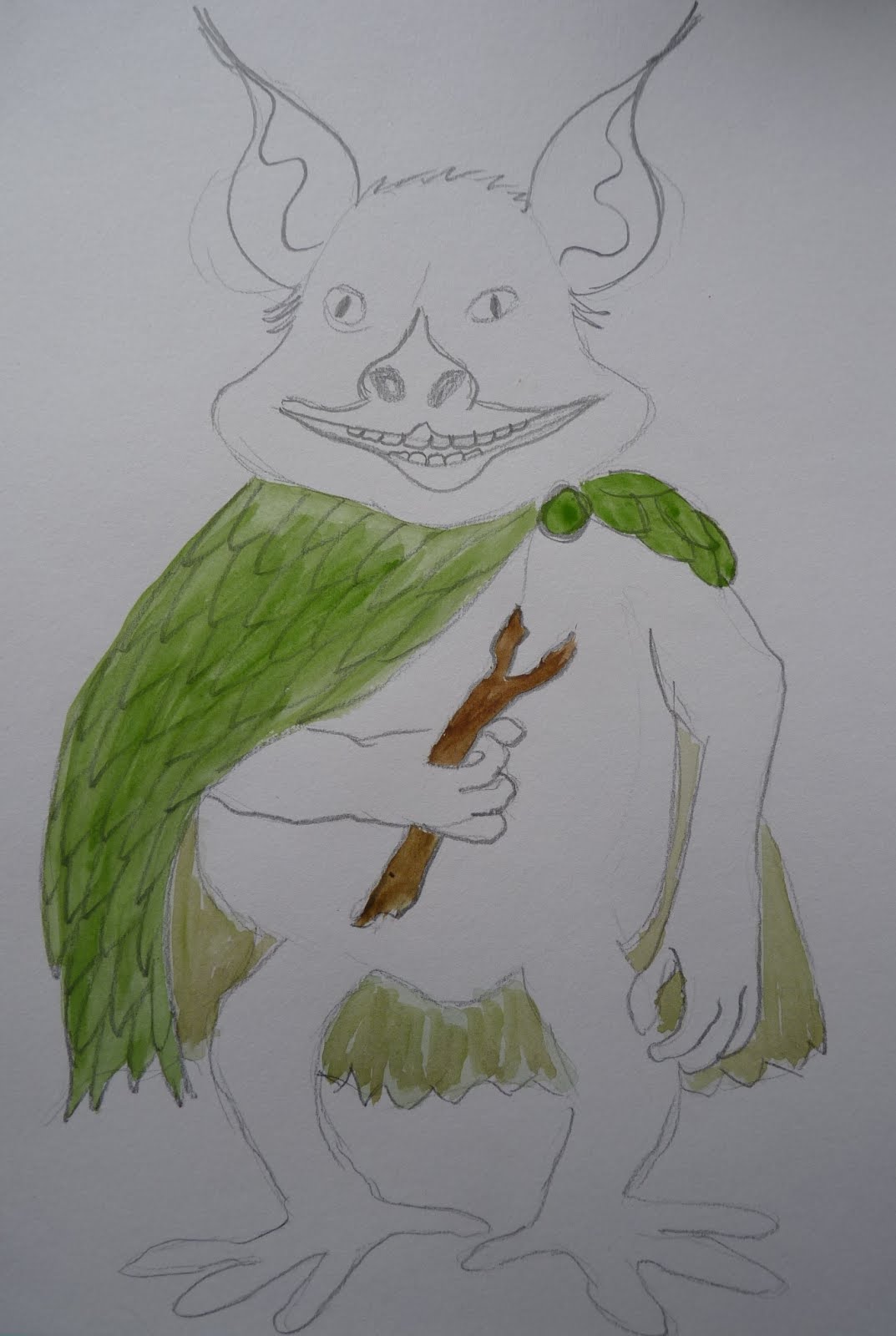
Your cakes are too tiny for Giants!
Our thoughts about what we had seen differed greatly. We spent some time with a trainee teacher, whose lesson was pure drama from start to finish. Our deputy was concerned about the pace, the learning and the progress in what she thought was an English lesson. I saw it as more than that: PSHE, collaboration, decision making and totally led by the children. There was no written work at the end of it, but photographs and film clips were taken throughout. The planning made sense to me as well. It wasn't comprehensive, because things change. Energy was put into the ideas and resources for the lesson, not the paperwork. To me it was dynamic.

 Even more memorable was what was going on in the infant classroom (a gardening company). It was busy, the children were excited, they were making decisions and different things were happening in different areas of the room. It wasn't a conventional room either. It wasn't dominated by tables and chairs. The displays were not particularly neat, but they were covered with the children's ideas and work. I was hooked. This felt right to me. The learning had been put into a context and the children were thriving on it. I saw much evidence of their learning, but was astounded by the children's confidence and the way that they could reason and articulate their thoughts. Our new headteacher at Roydon felt the same the first time she saw me teaching this way.

My first major mantle

My first mantle S.T.A.R.S (space transportation and restoration services) lasted a whole term. It was with year 5/4 children. I worked in role as many different people throughout the term, but started the mantle as an angry professor who was cursing NASA's inability to launch a rocket. Did the children know it was me? Of course. Did they immerse themselves in the drama of the situation anyway? Totally.

A Chadburys employee
What was more noticeable was the 'buzz' that was created. Parents were interested in what was going on and they were telling me that their children were talking to them about their learning in ways they had done previously.
Teaching through this way seemed to naturally support children with SEN, whilst stretching TAG children. How do I know this? Through what I was seeing and hearing and through their results at the end of the year. I had lots of visitors and they were confirming what I was feeling - it is a positive way for the children to be in control, make progress and learn.

The importance of appropriate language

I have written this post in response to a comment on twitter that suggested I was 'deceiving' the children. It is true that you are creating an imaginary world, but surely this is what we want to do in school - feed and nurture their imaginations? I am careful with the language I use and favourite phrases include:

'I wonder what it would feel like ...'
'What would you do if...?'
'What would it be like if ...?' 
'When I put on this hat/tie/jacket I will become...'


There are many more phrases that I will use during a drama, but sometimes I drop right in role without warning. At these times, language is used carefully to debrief the children. I am not going to go into detail about mantles, as I have written about them elsewhere, but over the years I have worked with the children to rescue orangutans and polar bears (helped by Sir Richard Branson!), rebuild a Chocolatier that burned down, created documentaries and resources for publishing and broadcasting companies, become a rival company to RyanAir, catered for the needs of giants, gnomes and Australian documentary makers, been  trainee timelords and found many different artifacts that have led to huge investigations.

I could talk about drama and mantle of the expert for ever, because I am passionate about it. The benefits for me as a teacher are:

  • It suits my teaching style
  • Its creative nature keeps me happy as a teacher (I like dressing up!)
  • The enquiry approach lets children lead the way. I like pretending that I don't know the answers. It encourages the children to problem solve.
  • You never teach the same thing in the same way (so I don't get bored if I repeat a topic)
  • It promotes problem solving, collaborative skills, decision making and using initiative
  • It enables a personalised learning approach 
  • Amy Pond?!
  • There is never a dull moment!

I do not subscribe to the purist Mantle of the Expert approach that says the children need badges and identities in the drama each time. I have adapted the approach to suit my style and the needs of the children I am working with. That is why I like to call it drama in the classroom. Sometimes I am purely using drama to give a context for learning, other times we become a company. My mantles can last from a week to a term and are very flexible depending on the theme; there is no room for tenuous links. 

If you would like to know more about mantle of the expert, visit their main website. If you want ideas for using drama in the classroom, there is a booklet here. If you are still in doubt, imagine you are 5/6 years old and working for a gnome. Wouldn't that be fun?!


Sunday, June 17, 2012

Digital literacy project part 2


Digital literacy, outdoor learning, art and drama all mashed up - I'm in teaching heaven!


Easi-speak chatterboxes
We had a lovely trip down to the fen last week to collect some digital assets and use our imaginations. Our digital assets included photos and videos on the ipads, audio recordings on easi-speak microphones and chatterboxes and photographs using a range of cameras. The children also had sketchbook 'field guides' that they had made by carefully folding recycled paper. You can see the fantastic time we had on our class blog.

Ipads outdoors
A creature!

 We took a range of storytelling props with us including an old canvas satchel, old rusty keys, a magnifying glass, old bottles, a hat (found on a tree) and a door (found in a tree).

Who lives here?
Creature clues!

A door in a tree
Look! Old keys! What are they for?


Next week in class we will be painting maps and the creatures we found, before animating them. We will be using photostory, crazytalk, puppet pals and I can animate amongst other digital resources. I have had a go at animating some of my creatures to see how well they will work on crazytalk. I may get the children to give them voices, using audacity. More importantly, the trip was such a success for inspiring the children's use of language and firing their imaginations that I aim to get some of them back down there in small groups during the week. 


Creatures from the field guide found in the satchel.


I have also created models for the children of a map (which we will 'find' in our usual mantle of the expert way) and a creature that I spotted at the fen. 


The creature is the second that is adapted from Spiderwick, after all we all need a little help with our imaginations sometimes. The Spiderwick Field Guide (a perfect £2 boot sale find) and copies of creatures will be available for the children, as their ability to create from their limited experiences could prove too much of a challenge. Recent work on habitats and adaptation may come in useful when we are thinking about our creatures though. 


Sunday, May 13, 2012

Trumpet blowing!

I've had a drama article published in Creative Teaching and Learning Magazine! I had written a blog post called 'A Waspish Sort of Problem' about a drama day that I had led, based on a book called 'The Giant Jam Sandwich'. 


I had blogged about the event and shared it on twitter and was subsequently approached to write the arcticle. I admit that I was unsure at first, because of time limitations and  my ability to do a good job.
 So, now that I have done it, I am going to blow my own trumpet! Fitting it in was a miracle in itself (the week before the google teacher academy and during those google app tests). I have no intention to 'tweet brag' about the article or this blog post, but am blogging just because I am wearing a *proud face* right now and want to have a 'look what I've done' moment! 

Drama in the classroom: the power of twitter


Many people know what a drama queen I am. Not always in real life; as a true Gemini I can go from confidently outspoken to self-conscious, uber-relaxed to hyperactive at the drop of a hat. But I do love a drama in the classroom and I enjoy taking risks and trying new things. Dressing up and pretending to be someone else takes me back to my childhood and, whilst I have no acting ambitions, I like the reaction I get from the children. It is amazing to see how some of them can drop into the drama with me, instantly.


I have been lucky in the past to have other staff who are willing to dress up and drop in with me too. My previous headteacher has kindly been Samuel Pepys, Percy the Park Keeper, Henry V111, a French chocolate spy and a space cadet before. Teaching assistants have been in role as such people as Maid Marion’s lady in waiting and Jacqueline Wilson. This is not part of their job description, they do it because they enjoy it and can see the benefits.

I have roped some of my family into playing a role too. My dad and sister have been giants complaining about small cakes, my son is regularly a manager, employee or traveller. Sometimes you need a fresh face though. So a few weeks ago I asked on twitter if anyone could help. Within 30 minutes I had a video message from Miss Read ( @MissRead10 )  asking for help from Badger Publishing company.  

She was going on holiday and didn't have enough room in the case for her daughter's favourite book - The Hungry Caterpillar. She wanted to know if we could help. I wanted the children (in role as publishers) to come up with the idea that creating a book on the ipad would solve this problem. The initial problem was that my class were really indignant that Miss Read couldn't remove some clothes and put the book in! 'It's quite small after all!' Luckily, one of my chaps said, 'Well we could make a book and email it to her", which then prompted the ibook idea. We had used book creator before, but I wanted them to make an animated story, so I joined in as I always do (as an employee) and dripped some more ideas in.  The videos below are examples of what Badger Publishing company created.


This was a what I would class as a mini-mantle. Dropping into a drama for a short time (2-3 lessons) to achieve the desired outcome, usually covering only one or two curriculum areas.


 The next mantle I wanted to do would involve many more curriculum areas. It needed to incorporate learning about night time and nocturnal animals as part of our work towards SATs. I asked another fellow tweeter (@normal_for_JP) if he would do me a small favour. I wanted a way of getting the children to try and deduce the difficulties of capturing nocturnal animals on film. I was expecting a short audio/film clip request for help to film creatures. I was absolutely amazed at what I actually got! See for yourself!


The mantle had already started in the morning with a letter of complaint 
from a fellow nature lover, who said that the WPIT website was not very informative. Creating dilemmas is what gets a drama started and keeps it going.


WPIT decided very quickly that they needed to add more content and should probably make sure that their animal facts were accurate, so they set to work. It was at the end of the morning session that I showed the film. 
Initially we discussed the problem and the children reasoned why the animals weren't being captured. In the afternoon the WPIT employees filmed tips like the one below as a response for Backwoods Bill, which you can see on our class blog


We carried on working on our company website that afternoon whilst I was plotting ways of extending the problem solving and learning from Billy's film. It turned out that I didn't have to do much thinking (as usual!) I had tweeted about the post on our class blog and by the morning we had a response from Ross Mannell (@RossMannell) in Australia! Even more incredible was the fact that he had responded with a post of his own! We studied it carefully and came to the conclusion that Backwood's Bill might not even know anything about the creatures he was trying to film. WPIT's solution to that problem - create a guide book for him. Great! Enquiry learning with outcomes and success criteria naturally set by the children.


As another part of our work on night time I wanted the children to learn 'Be Safe, Be Seen.' So cheekily I asked JP if he could drop into role again and have an accident ... Once again a brilliant film was delivered that kept the drama going. It allowed me to cover objectives, but once again my class thought that they had made the decisions about the learning and the outcomes. 


So what can I say but a HUGE thank you to three fellow tweeters who have taken the time and made a big effort to add a bit of variety to my classroom.


What about me? Well I did make the effort in the end and drop into role as Backwoods Belinda - Billy's team mate. No film clip I'm afraid. My Australian accent was dubious and it was one of those times when I was glad that I was on my own in the classroom!


Backwoods Belinda
If you want to read more, you can see our class blog here