Showing posts with label inspiring writing. Show all posts

Tuesday, February 25, 2014

BB's Bizarre Beasts


This is a quick synopsis of a mini mantle that incorporates 4 days of maths and English. We became a Pet Company called BB's Bizarre Beasts, because children love animals and who couldn't be compelled to learn about these weird and wonderful creatures. Many of you who know me will be aware that the planning is sketched in my head and that I feel that writing it down comprehensively is a pointless exercise. I'd much rather put the time and energy into resourcing and enhancing my ideas - or sharing them! So hopefully these resources will inspire you!

The learning objectives are:


Identify and record the information or calculation needed to solve a puzzle or problem; carry out the steps or calculations and check the solution in the context of the problem

Solve problems involving addition, subtraction, multiplication or division in contexts of numbers, measures or pounds and pence

Recognise all coins

Halving


When we became the pet shop I put on my work apron and cap, put my notebook and pen in my pocket and introduced myself as the proud owner of Bizarre Beasts, the best pet shop in the universe. I talked about all the creatures in our shop before playtime and shared little stories about them (trivial facts like what they ate, where they lived, who they lived well with). This took about 10-15 minutes.
I debriefed them afterwards, as some of my children were saying 'Is this real?' They needed to know that my stories were in my imagination and that it would be cruel to keep wild animals in a pet shop. My class liked the idea that we were using our imagination this way. After play, before we dropped back into the drama, we had a quick white board maths session when we thought about how we drew 'stories' to solve problems. We practised the skills we needed before the drama; problem solving is a whole class target and I wanted them to have their memories jogged about some familiar strategies. 


 In preparation for after play I had blue-tacked some of the animals around the room, with trickier problems where the higher ability children sit in class. When we became the pet shop again, I told the employees that there were lots of problems to solve in the pet shop today and that I needed their help. My class set off to work together to solve the problems, with a real buzz. They could work where they wanted. I asked some employees to work with me and help me solve the problems. The employees had activity sheets to write their answers on and were aiming to get a 'pay rise' for their hard work (they worked well to that incentive!)

The same activity sheets have been adapted for tomorrow, when unfortunately one of our Swedish employees has been giving the wrong change. I have written the cost of each animal in the end column and the children have to show the coins that are needed to pay, so that these posters can be displayed near the shop till. Mid ability children will show 2 different ways for each price, high ability at least 3 different ways of paying to help our Swedish employee. This will lead on to giving change from 20p, 50p and £1. 

Before they drop into the drama, they will have a quick maths skills practise, so that I know that they have the skills they need before they go off. This will consist of coin recognition and paying amounts, which will be no longer that 15 minutes. There are ways of doing this within the drama and I have considered jumping back in time to when all the new employees from other countries had money training, but I have an observation tomorrow and I am wary of being overly dramatic!


The last maths activity will be when we have the dilemma of not making enough money to pay the employees. The solution - half price sale!


For writing activities we are adding some descriptions of creatures to put by their tanks (this downloads better than it looks online)  and some persuasive posters for our half price sale. 


Sunday, January 12, 2014

What's in the news?


When I first started teaching at Roydon Primary in 2001 each child had 'passport to the world' folders in which they collected work about world news. I love the global element of learning and have tried very hard to incorporate world events into my mantles, for example monsoons in India as part of Asian elephant rescue centre and successful/unsuccessful shuttle launches when we were STARS (space transportation and restoration specialists (I have many more examples...)

Participation in Etwinning, Comenius projects and more recently quadblogging have all helped promote the similarities and differences in countries and cultures, but I am aware that I have drifted away from ensuring that children all know about major world news. One way of achieving this came from my friend Jenni Porter, who uses CBBC Newsround each Friday so that the news is shared and talked about. I have endeavoured to do this, but have traditionally been out of the classroom on a Fri pm, so aimed to do it during other whole class times. Quite often it slipped off my list though.


This term I have decided to try and incorporate the use of CBBC Newsround into an adapted version of Julia Skinner's 5 sentence challenge, which will be one of my PPA lessons. As we do read, write inc, this provides one opportunity to write beyond that.

How the 'almost hour' will look

 An aspect of the news will be shared during talk time, using CBBC, then the teacher will model juicy (wow, power) words about the events and thoughts / feelings / opinions surrounding it to enrich the children's vocabulary. These will be written onto coloured bits of card and scattered around the IWB (yes, I know you can do it interactively, but you can hand these bits of card out to the children). The expectation is that the children write 5 - only 5 - sentences of their own. There will be a time limit on this, so that valuable time can be given to the reflection / self-assessment part. I am a strong believer in the mini-plenary, so although a TA may be used to work with a different guided group each week, the teacher will be the one who moves around, encouraging, thinking out loud, then making a huge fuss of the amazing sentences that are being written.


 One of the first ones we will look at is the US big chill, then I may find other new species like the hairy troll bug. Who couldn't be inspired by that?!


Why I like the Collins Big Cat apps

I have been thinking about 'inspiring writing' over Christmas and the new year in response to pupil progress at school. I thought it was about time I blogged about some of my favourite apps that lend themselves nicely to the development of literacy skills.

Collins Big Cat apps won a Bett award in 2013. Quite right too! I have been meaning to blog about why I love them for a long while. I will point out at this time that I am not employed by them and have no pecuniary interest, I just like shouting about the things that I find to be effective in the classroom. I recommend these apps to our parents too.


These are the great points about the apps:


  • The transition from reading to writing is made simple
  • Children can listen to the story before reading it themselves
  • The stories are nicely animated with some interactive elements
  • Children can practise expression by narrating the story, then naturally self-assess by playing back the audio
  • You can use each app to create different stories
  • The story creator part has a range of scenes and characters to choose from
  • There are 8 different apps
  • The apps are FREE

I have used these in a year 2/1 class for guided reading and writing sessions, during book choosing time and for whole class work. The texts range in difficulty, but are perfect for developing language skills from EYFS and infants to children with SEN. Don't forget you can find more great apps on my ipad site too.


You can add text boxes or callouts to your stories

Text is highlighted as words are read to you
Thank you Collins!


Monday, January 6, 2014

More ideas to develop a writing culture in school

I asked @JenniH68 to write a guest post for my blog and she obliged! Well that's to say she wrote the post on her blog (which has now become our collaborative blog!) Never Mind the Spag. Without being too gushy, I know that you will be inspired by Jenni's ideas on inspiring writing, whether they remind you of something you have done before or whether they are totally original ideas. 

There are some similarities / close alternatives that I value in my own practice that I will share afterwards. Some of these ideas I introduced as an infant teacher, but most have been used in KS1 and 2. Maybe you can add some of your own as comments below?

What I learned from Jenni before now is to use music videos to inspire writing and the thing that I really take from Jenni's post is the hairy troll bug -I'll hand you over!

20131231-183351.jpg 

 More ideas for developing a writing culture... Writing for real audiences cannot be emphasised enough. From parallel classes, younger and older children, to other schools in a cluster. We send copies of stories and books we have made to whoever has inspired them,from Allan Ahlberg- who, by the way, writes amazing personalised letters back- to music video directors; and we also made a child friendly guide book following a visit to Blickling Hall- we haven't heard back from all of them yet, but we know we have sent them and that real and diverse audiences are reading our writing. After listening to the incredible Mick Waters at the NCBC 'Reading for Pleasure' conference back in November, I have introduced an intermittent ' amazing news story' spot - still thinking of a catchier title! Like this one: (see above!)

  Hairy Troll Bug!

 Mick Waters argued that we need to keep the children reading 'controversial, fascinating texts which challenge you and make you think about things in a different way'. Reading an interesting or irresistible news story such as the one above naturally makes you look at a much wider range of texts. He called it 'Hot tub learning'- it's warm, inviting, fun and you don't want to get out....he went on to stress the importance of exploring and discussing controversial issues and encouraging the children to challenge each other's thinking 

As well as the pupils sorting their books themselves, how about getting them involved in choosing the books you purchase as a school. Persuasive writing anyone?

 I have also been banging on about this one for a L O N G time, but choral reading aloud needs to be brought back! Not just Pie Corbett style story telling as important and imperative as it is. No. Reading a text as a group or even a class. Why? We encourage good readers to be silent readers...however, they soon lose the ability to read aloud with appropriate expression, paying little or no attention to the punctuation. By reading a piece of narrative aloud, it makes you more aware, as a reader and a writer, of how to tell a story to that 'audience' we keep banging on about. Reading the Christmas Story as a class was actually quite magical just before the holidays. I have Y2/3 and they are not all by any means fluent, but, as part of a crowd, you pick up the good habits of others and can hear what those trickier words are....this improves confidence, broadens vocabulary and increases awareness of what a text should look and feel like on the page.

 Reading their own writing to each other is so quick and simple and peer marking and feedback Is often much more powerful than any adult opinion!

 I have an ' I wonder...' box in the classroom where the children can post random questions about anything, anonymously or named. We have recently had 'What are clouds made of?' which then prompted much reading and note taking about clouds, fog and mist, as well as 'I wonder why so many words are spelt wrong?' Good one, not quite answered that yet.... We also have notebooks and every week I try and stick a question or prompt in there for them to interact with me more informally. Sometimes it's to do with the topic, sometimes random. In their notebooks, the left hand page belongs to me- where I can write or stick a question, and the right hand page belongs to them- they can answer my question on either page, but I don't interfere with 'their' pages! They seem to love the idea we are sharing a book!

 And last, but not least...talk to the children about their writing like you actually enjoy it, and have actually read it for its own sake rather than just pointing out next steps all the time. I think I sometimes underestimate the effort they have out into their writing for me to then moan about marking it (not to their faces!). And I definitely think that we, as teachers, forget just how powerful and influential our opinion of their work is to them.

Jenni Porter


My similarities / close alternatives
  • Peer assessment. Another teacher will be doing the 5 sentence challenge for me this half term and so I thought it would be a great opportunity for peer assessment. We will start with this simple one 
  • We have a 'Why box' where the children can post questions. I've learned lots from these!
  • We have a heart shaped box and post-it notes so the children can write what they have loved/enjoyed learning
  • Choral reading (or as I call it 'story telling') not only to inspire writing, but for the joy of retelling a story. The one below was performed for our HT's parents when they bought our class bear back from Australia. They are year 2/1s. When I have used this before as a model for writing, the writing has been phenomenal.


I have tried author audience (Michael Rosen commented on our poems on twitter ones), but haven't been that successful. Perseverance is key! 


Tuesday, December 31, 2013

Inspiring writing


After looking through pupil asset this holiday I have been trying to think of ways to further inspire writing at East Harling, as this is an area that needs improving. As SENDco and the person with responsibility for assessment, I need to be aware of all the children who are struggling and I feel it is my duty to support the teachers to support the children. Running a Film Club for year 6 children targets some literacy skills as they write reviews and we discuss the films. I can also have a direct influence on children in KS1, but need to make sure that I support the children and teachers in between.

As a school we have just introduced Read, Write inc and although I was the biggest sceptic, after using it for a few weeks I can see how it will support struggling writers. This is only part of the solution though, so I am thinking of other ways of creating a writing culture at school. Many of you will know how I use a dramatic enquiry approach to teaching and this lends itself very nicely to purposeful writing across the curriculum, for example my digital literacy project and 'A Waspish Sort of Problem'. This has been embraced by East Harling and we have agreed as a school that teachers will teach though drama at least once a term. 


 Introducing blogging will further help develop a writing culture and this is top of my list for 2014. I will also let teachers know about Julia Skinner's 100 word and 5 sentence challenge. I have used Julia's ideas effectively with my own pictures as additional creative writing  and guided group sessions. I have shared my 'Talking Pictures' visual literacy pack (laminated stills and art work) with our year 3 teacher and she reported that the children loved it. The pictures include a selection of Jacek Yerka's art work, which I have blogged about here


I use a range of interesting pictures, then ask questions to inspire talk, before descriptive writing. The pictures are great for comprehension, lending themselves nicely to in-depth inferences and deductions. When writing, starting with simple observations about the picture, then building on them can inspire some great sentence writing. We write on white boards so that editing can be done easily (I have found that this reduces anxiety for children). I laminated the questions below to support teaching assistants and parent helpers deliver effective guided sessions, as they may need support with development of questions. 


This works well in my class, but I need to think about promoting writing across the school. These are my ideas so far. They are not original ideas, but ways of developing writers: 


  • Hold a whole school writing competition each month. This can be part of my assemblies, so kills two birds with one stone (I'm all for time saving!)
  • Get East Harling blogging
  • Employ some reporters to write about sporting events or other special occasions
  • Start a newspaper club, managed by a parent
  • Host drama days 
  • Participate in Livewriting
  • Start a book club for year 4/3 children, managed by a parent, to meet once a month
  • Start a creative writing group
  • Create a blog with resources that teachers can use
I sent a message to my good friend Jenni about the last point, as she was an AST for English and has delivered many workshops and training on writing. She was way ahead as usual and had started a blog called 'Never Mind the Spag'. It hosts a collection of resources to support writing that have been used successfully before. Taking the time to share things is what makes Jenni the inspirational leader she is, and I was chuffed when she invited me to blog with her. I have added my favourite pictures from Machinarium and Tiny Bang Story as these have worked for me in the past. 


I hope that these are of use to you too. Don't forget of course the fantastic Literacy Shed, which hosts a huge range of resources to inspire writing. 


Tuesday, June 5, 2012

Digital literacy project part 1

I was asked recently to participate in a digital literacy project at the UEA with other Norfolk teachers. This immediately excited me as it not only includes areas of teaching that I am passionate about, but also came at a time when ICT and literacy have become even more prominent in my working life. I have been employed by cluster schools to provide outreach for ICT, but with a strong emphasis on writing as it an area within the cluster targeted for development. I am also working with a fellow 'ex-AST' to put together an 'Inspiring Writing' blog, though credit must be given to Jenni for doing a much larger chunk of the work so far (this is a work in progress, not a fully polished site).

The project

The project has been inspired by Kate Pullinger, author of the innovative transmedia story Inanimate Alice, and put together by PGCE lecturers (Dr) Paul and Jeni. We were very fortunate that Kate had been invited to talk to us during this initial meeting and offer guidance and inspiration. For me, the inspiration came in
buckets!

The group

The group consisted of five Norfolk teachers, two of whom I already knew from twitter - Sarah Prentice and Niki Teasdale - and two other primary teachers, Helen and Adam. Sarah, like me is an avid blogger and Niki an avid writer. All of the other teachers in the project are part of a 'Writing Teachers' group led by Jeni and Sarah had used Kate Pullinger's work in class before, so was very familiar with her work.

Kate Pullinger

Kate introduced her Inanimate Alice  work and resources, which we had varying degrees of familiarity with. I had looked at it a while ago, as I had seen it mentioned on twitter, but had not considered it appropriate for my 2/1 class. I can see the huge potential it has for older children though and writing the next episode using Hackasaurus x-ray goggles must surely grip reluctant writers? (I will try this out at some point in my outreach work.) Kate then showed us a project that she had been involved in with schools in Ipswich called Ebb and Flow, which offered yet more inspiration for digital literacy. I will not go into detail about it here; the website speaks for itself.

My project

The brief is to develop a digital literacy storytelling project within our own schools, with the view to presenting it during a conference to PGCE students and teachers. I love the idea of using the local environment and am passionate about storytelling, so coming up with an idea was easy. In the first week back after the holidays I will be taking my children into local woodland to collect a range of digital assets (photographs, audio clips and videos). To get into the storytelling mood, we will take a range of props with us, which will have been 'found' inside a satchel and will form the start of a mantle/enquiry. As I was thinking about this, I remembered the Spiderwick Field Guide that a child in my class was obsessed with a few years ago. This offered more inspiration for props, which will include the bag itself, a magnifying glass, a map of the local fen and woodland, a pair of tweezers, a specimen jar and a field guide.

I have been creating the field guide this week and am thoroughly enjoying it. One of the pictures has been inspired by a Spiderwick creature, another by Shaun Tan (not finished yet, so not shown). The rest are just sketches that I have developed. I will add more throughout the holidays as and when I have time.


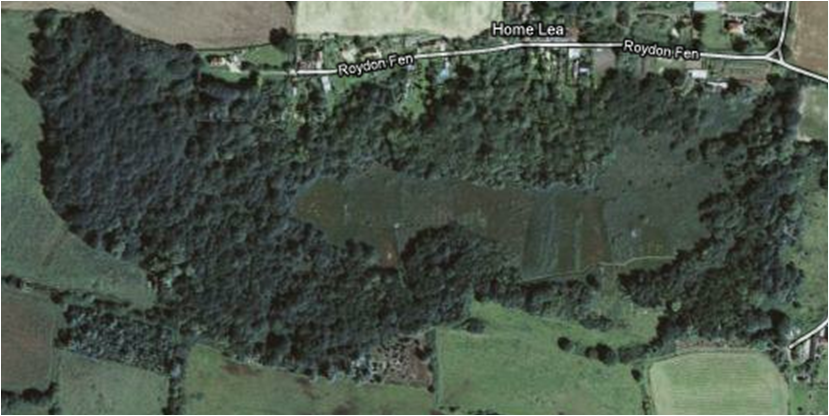
The idea is that the children will go down to the local fen, spot some creatures, then share stories about them in dens that they have made. The fen is a perfect place as there are lovely boggy parts, small and large wooded areas and plenty of space for den building and story telling. Getting into the role of field explorer will be easy. I am toying with the idea of using carefully positioned QR codes for some of them to 'find' creatures that I have created, but I'm not sure if this type of staging will be beneficial. I do want the children to 'spot' their own creatures, but I know that some may struggle with this.

Roydon Fen


I am imagining that the 'explorers' will collect audio clips of their observations, thoughts and feelings in the style of  David Attenborough, with photos of the environment and the props they are using. I will ask my army of parent helpers to do their best to model the language that might be used when a new creature is seen. We will take with us our ipads, cameras, easispeak recorders, chatterboxes and phones. The 'explorers' will have their own field guides too, created from recycled paper, in which they will make their observations.

I have a lot of ideas for the outcomes of their work, but am keen that the children suggest what they should do. They often come up with better ideas! Possibilities include:

  • Top trump style cards created in powerpoint or textease, with animations (using puppet pals or visualisers) instead of pictures of the creatures 
  • Interactive storytelling maps inspired by Tom Barrett at #gtauk (they are not familiar with these, so I will suggest them)
  • Pictures of the fens that have stories/poems embedded in them
  • E-books, using book creator
  • Photostories
  • Creature pictures with stories embedded or linked
  • Sticky note poems using linoit
I will continue to blog about this over the next couple of weeks. I hope it has offered some inspiration - please let me know if it has! I am fired up already and looking forward to an assessment free half term!