Showing posts with label Digital literacy. Show all posts

Sunday, April 12, 2015

Digital Literacy


When I first created the Digital Literacy page for my iPad site I took the title literally and included all sorts of great apps to support children's developing literacy skills. Then I read other educators' work, such as Doug Belshaw's, which pointed me in the direction of things like Future Lab's ideas, from It's Not Chalk and Talk Any More


'Digital literacy is a complex and contested term. It is often understood as the ability to participate in a range of critical and creative practices that involve understanding, sharing and creating meaning with different kinds of technology and media ...'


This made me realise that I needed to change my thinking - and the website page! It's taken me a long while getting around to it - and now it is a relatively naked page waiting to be dressed. I need to do it properly, so need to read and reflect.


In their computing guide, CAS make it clear that there are three aspects to the new computing curriculum: computer science, information technology and digital literacy. Their aims for digital literacy are that 

'[All pupils] are responsible, competent, confident and creative users of information and communication technology.' 

though they also acknowledge that the distinction between information technology and digital literacy are open to interpretation. What these aspects do though, is remind us that the new curriculum is not solely about computer science and programming. A lot of people turned their noses up at the new curriculum and complained about the lack of creativity. I wasn't one of them as I think that we have been given carte blanch to interpret the curriculum, carry on doing what we know works well, whilst ensuring that we are teaching essential skills and the area of the old curriculum that most teachers were shying away from - control and modelling. That's not an assumption based on anecdotal evidence - it was the area I was most requested to support during the five years when I worked as an AST and ICT consultant.

So now I am trying to get my head around what digital literacy would look like for children in KS1 and KS2 at our school. I have found a digital literacy skills checklist - Being Digital - from the Open University, which has provided food for thought and is a useful model for my own document. 

My aim for the next half term is to create a meaningful digital literacy page on the ipad site, continue creating some self assessment documents for the computing curriculum, based on my ICT and iPad self assessment documents whilst simultaneously deciding what digital literacy means for our school. Needless to say they go hand in hand - curriculum and assessment.

If you are a regular reader to my posts, you will know that at East Harling we worked together to create a unique new curriculum with values that are meaningful to our school. Each term we share the ways in which we have covered our curriculum and I love hearing what other teachers have done, because there now seems to be very little time in the working week to catch up. We are desperate to hold on to these ideals, whilst working hard to get to grips with the new curriculum and demands of OfSTED and better than expected progress. It is unfortunate that many of the strengths of our children are not measured in their SATs tests, but that's a whole new blog post... 

Because of the aforementioned reasons I don't want to rush, in the same way that we have not rushed into a new assessment without levels system (plus I'm doing this under my assessment coordinator and 'can't let go of ICT'  hat and really must work alongside our computing coordinator on this). Our computing curriculum and assessment methods have to fit in with how we want to prepare our children for secondary school - and life!

If you know of any essential reading to add to my list, I would be very grateful, as I suspect would many other IT folk who read this post! 


Reading list 

Future lab - Digital Literacy Across the Curriculum

Miles Berry - The New Computing Curriculum -some thoughts in fact pretty much everything Miles writes on his site is useful!

Kevin McLaughlin - Digital Literacy in the Primary Classroom

Simon Haughton - Interpreting the New Curriculum Requirements

Somerset learning platform - Digital Literacy

Or if you need a break from reading, then sit back and watch Doug!

Friday, March 22, 2013

A day in the life of a teacher/ ICT consultant

Today has been a typical outreach day - model lessons and a staff meeting - but I thought it was worth blogging about because the lessons were with my class and the staff meeting was a mini cluster teachmeet.

The first 'lesson' of the day was a model control technology session for a visiting student and NQT. I have asked the question 'What do we control?' at the start of a few similar sessions, but was not expecting the response I got from my children. They seemed to have a clearer idea than much older children as 90% of my class had their hands up straight away. That was a 'wow' moment for me.


During this session I had put out a range of software and hardware for the children to use. I have written about it here so won't repeat myself. I would like to say here though that my recent de-cluttering of one (just one) of my display boards is great for showing off WOW work. I was able to showcase one child's accurate Gruffalo journey (using textease turtle) for immediate impact.


This is maths work - Gruffalo photo coming soon

After play we started to create our puppet pal movies. The children had written stories about Mr BB being scared by a monster in the woods. To be honest, the children had taken me in a totally different direction with this mini mantle/enquiry, but the outcomes were the same. They had created monsters, described them in detail and written detailed stories using a story path plan. They seemed very motivated by the subject matter - both by the monsters and Mr BB! You can see one of the films below and catch the others on our class blog. (Photos of Mr BB were available, but Jasmine preferred to improvise!)


My afternoon was spent writing a letter to the local press about our digital leaders, reading through a couple of Rising Stars great ICT units and preparing for our cluster schools teachmeet.

I wanted to do a teachmeet on digital literacy because raising standards in writing is an aim in the cluster and I was sure that lots of us would have examples of good practice and resources to share. The point of doing a small cluster one was to raise awareness of the power of teachmeets for cpd. Teachers shared the following gems:


Games for writing
Teacher in role
Drama for writing - dinosaurs

Puppet pals animations
Using film for story writing
Stories to teach e-safety -  EYFS / KS1
Morfo
SEN word books
Show me / explain everything apps
Hot-seating and use of easi-speak resources


The great thing was that everyone came away having learned something new - as well as having the chance to share and celebrate their practice. One of the comments afterwards, from a teacher who was unsure about the teachmeet encapsulated the feelings of many. She said how it was very relaxed, not at all as she had imagined and that she could find ways of using the ideas from other key stages that were talked about. Perfect! 

Friday, November 30, 2012

Digital Literacy Project: The End

Today I worked with other inspirational teachers - Sarah, Niki and Adam  - at the UEA to show PGCE students our digital literacy work. The work was inspired by Kate Pullinger's 'Inanimate Alice' and I have blogged about the start of the project here.  When I started to put together a prezi for my presentation, I felt very proud of the work that my children did. It was lovely to spend time revisiting this work that we did at the end of the last school year. The whole project had a good feel to it and a great balance of drama, enquiry and ICT. We really explored our creativity in a great local environment.


When I looked back at posts on this blog I realised that I hadn't shown all of the work. My children's finished work was collated in a map so that parents could see some of their fabulous films, stories and poems all in one place. Of course there are more examples of my children's puppet pal movies, photostories and art work on their class blog. We did a lot and even got a comment from Michael Rosen! It is work that I will definitely repeat in some way!


                                                               View Digital stories by Badger Class in a larger map

Sunday, June 17, 2012

Digital literacy project part 2


Digital literacy, outdoor learning, art and drama all mashed up - I'm in teaching heaven!


Easi-speak chatterboxes
We had a lovely trip down to the fen last week to collect some digital assets and use our imaginations. Our digital assets included photos and videos on the ipads, audio recordings on easi-speak microphones and chatterboxes and photographs using a range of cameras. The children also had sketchbook 'field guides' that they had made by carefully folding recycled paper. You can see the fantastic time we had on our class blog.

Ipads outdoors
A creature!

 We took a range of storytelling props with us including an old canvas satchel, old rusty keys, a magnifying glass, old bottles, a hat (found on a tree) and a door (found in a tree).

Who lives here?
Creature clues!

A door in a tree
Look! Old keys! What are they for?


Next week in class we will be painting maps and the creatures we found, before animating them. We will be using photostory, crazytalk, puppet pals and I can animate amongst other digital resources. I have had a go at animating some of my creatures to see how well they will work on crazytalk. I may get the children to give them voices, using audacity. More importantly, the trip was such a success for inspiring the children's use of language and firing their imaginations that I aim to get some of them back down there in small groups during the week. 


Creatures from the field guide found in the satchel.


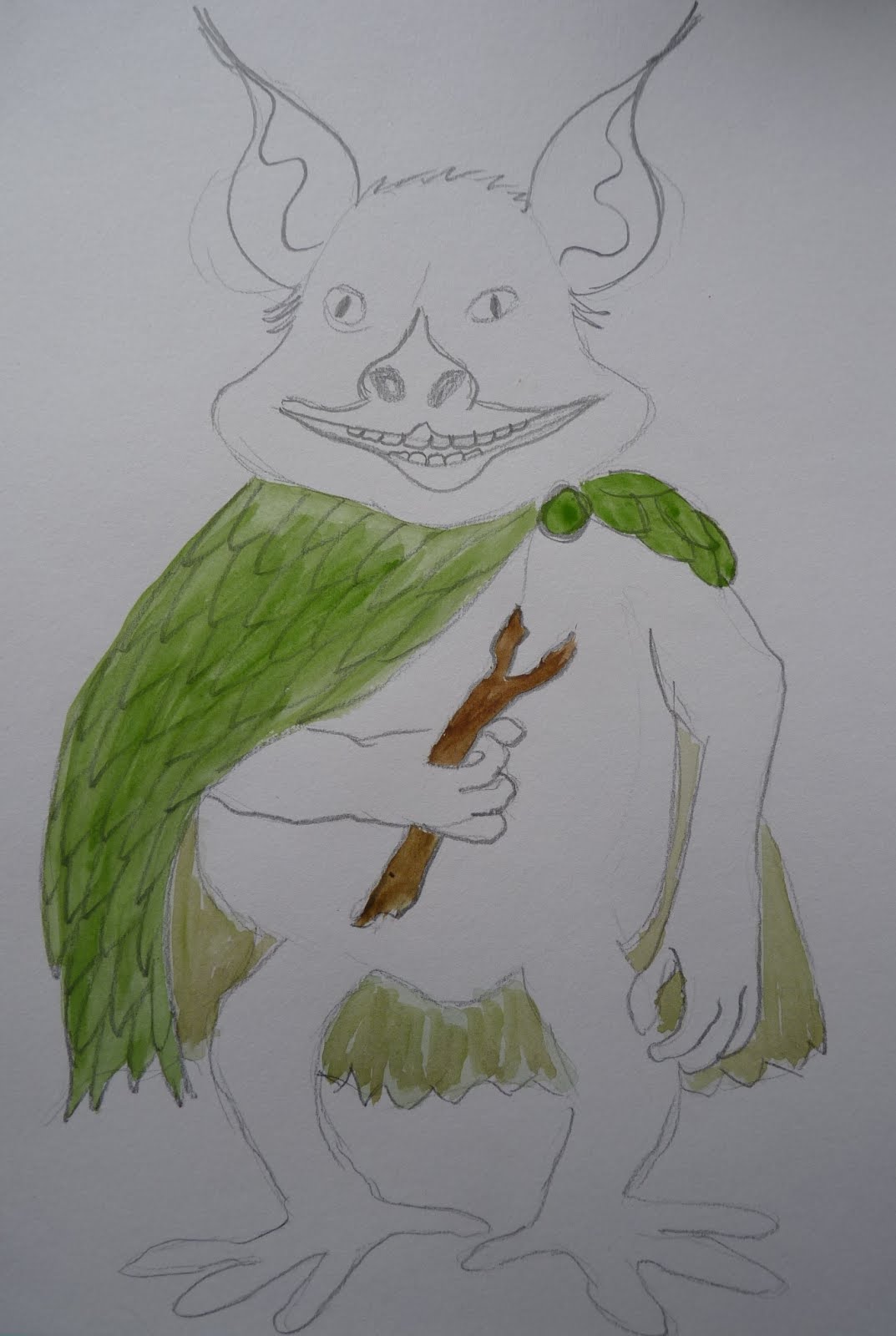
I have also created models for the children of a map (which we will 'find' in our usual mantle of the expert way) and a creature that I spotted at the fen. 


The creature is the second that is adapted from Spiderwick, after all we all need a little help with our imaginations sometimes. The Spiderwick Field Guide (a perfect £2 boot sale find) and copies of creatures will be available for the children, as their ability to create from their limited experiences could prove too much of a challenge. Recent work on habitats and adaptation may come in useful when we are thinking about our creatures though. 


Tuesday, June 5, 2012

Digital literacy project part 1

I was asked recently to participate in a digital literacy project at the UEA with other Norfolk teachers. This immediately excited me as it not only includes areas of teaching that I am passionate about, but also came at a time when ICT and literacy have become even more prominent in my working life. I have been employed by cluster schools to provide outreach for ICT, but with a strong emphasis on writing as it an area within the cluster targeted for development. I am also working with a fellow 'ex-AST' to put together an 'Inspiring Writing' blog, though credit must be given to Jenni for doing a much larger chunk of the work so far (this is a work in progress, not a fully polished site).

The project

The project has been inspired by Kate Pullinger, author of the innovative transmedia story Inanimate Alice, and put together by PGCE lecturers (Dr) Paul and Jeni. We were very fortunate that Kate had been invited to talk to us during this initial meeting and offer guidance and inspiration. For me, the inspiration came in
buckets!

The group

The group consisted of five Norfolk teachers, two of whom I already knew from twitter - Sarah Prentice and Niki Teasdale - and two other primary teachers, Helen and Adam. Sarah, like me is an avid blogger and Niki an avid writer. All of the other teachers in the project are part of a 'Writing Teachers' group led by Jeni and Sarah had used Kate Pullinger's work in class before, so was very familiar with her work.

Kate Pullinger

Kate introduced her Inanimate Alice  work and resources, which we had varying degrees of familiarity with. I had looked at it a while ago, as I had seen it mentioned on twitter, but had not considered it appropriate for my 2/1 class. I can see the huge potential it has for older children though and writing the next episode using Hackasaurus x-ray goggles must surely grip reluctant writers? (I will try this out at some point in my outreach work.) Kate then showed us a project that she had been involved in with schools in Ipswich called Ebb and Flow, which offered yet more inspiration for digital literacy. I will not go into detail about it here; the website speaks for itself.

My project

The brief is to develop a digital literacy storytelling project within our own schools, with the view to presenting it during a conference to PGCE students and teachers. I love the idea of using the local environment and am passionate about storytelling, so coming up with an idea was easy. In the first week back after the holidays I will be taking my children into local woodland to collect a range of digital assets (photographs, audio clips and videos). To get into the storytelling mood, we will take a range of props with us, which will have been 'found' inside a satchel and will form the start of a mantle/enquiry. As I was thinking about this, I remembered the Spiderwick Field Guide that a child in my class was obsessed with a few years ago. This offered more inspiration for props, which will include the bag itself, a magnifying glass, a map of the local fen and woodland, a pair of tweezers, a specimen jar and a field guide.

I have been creating the field guide this week and am thoroughly enjoying it. One of the pictures has been inspired by a Spiderwick creature, another by Shaun Tan (not finished yet, so not shown). The rest are just sketches that I have developed. I will add more throughout the holidays as and when I have time.


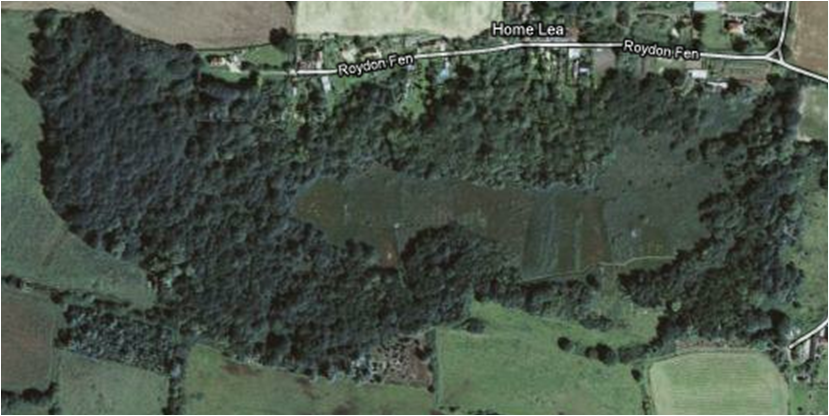
The idea is that the children will go down to the local fen, spot some creatures, then share stories about them in dens that they have made. The fen is a perfect place as there are lovely boggy parts, small and large wooded areas and plenty of space for den building and story telling. Getting into the role of field explorer will be easy. I am toying with the idea of using carefully positioned QR codes for some of them to 'find' creatures that I have created, but I'm not sure if this type of staging will be beneficial. I do want the children to 'spot' their own creatures, but I know that some may struggle with this.

Roydon Fen


I am imagining that the 'explorers' will collect audio clips of their observations, thoughts and feelings in the style of  David Attenborough, with photos of the environment and the props they are using. I will ask my army of parent helpers to do their best to model the language that might be used when a new creature is seen. We will take with us our ipads, cameras, easispeak recorders, chatterboxes and phones. The 'explorers' will have their own field guides too, created from recycled paper, in which they will make their observations.

I have a lot of ideas for the outcomes of their work, but am keen that the children suggest what they should do. They often come up with better ideas! Possibilities include:

  • Top trump style cards created in powerpoint or textease, with animations (using puppet pals or visualisers) instead of pictures of the creatures 
  • Interactive storytelling maps inspired by Tom Barrett at #gtauk (they are not familiar with these, so I will suggest them)
  • Pictures of the fens that have stories/poems embedded in them
  • E-books, using book creator
  • Photostories
  • Creature pictures with stories embedded or linked
  • Sticky note poems using linoit
I will continue to blog about this over the next couple of weeks. I hope it has offered some inspiration - please let me know if it has! I am fired up already and looking forward to an assessment free half term! 

Thursday, May 24, 2012

Jacek Yerka


I have waxed lyrical about the art work of Jacek Yerka a couple of times this week (again) and so thought I would add a quick post about this extraordinary artist. I have used his work during BIG writing sessions, for oral storytelling and talk time. Last weekend I used one of his pictures during a livewriting session.
So here are a few of my favourites, but there are many more amazing pieces. They can engage and inspire children of all ages (and adults too!) My year 2/1 children have showed amazing creative writing skills when presented with the artwork (I will add a piece of their writing shortly).
I intend to use Yerka's art as a hook in an exciting new digital literacy project, inspired by the work of Kate Pullinger. Keep your eye out for a blog post in July!


In the meantime, if they could answer, what questions would you ask these pictures? What would the pictures say in response?


What is in the well?
Where have you come from? Is anyone driving you?
What are you for?
Who built you?