Saturday, October 18, 2014

Computing in KS1 and 2


I just thought I would share some computing resources that I haven't blogged about before (you can read previous computing posts here and don't forget the shared computing documents that you can access in the sidebar on the right).

The BBC have kindly produced a page that will help you explain the basics of algorithms to infants if you are struggling.


It also covers another important part of the computing curriculum How to use the Web safely, which includes amazing apps, wonderful websites and great games. There is also a section on personal information, which reminds us what we should cover as well as providing an infant friendly way of explaining it. Not bad for a freebie!


This presentation by Emma Goto may help you deliver the computing curriculum in KS1 and 2 without the use of whizzy technology, but by using things usually found in infant/early years settings.

Another great idea for computing without a computing comes from Dr Techniko - How to train your Robot.If you are a member of TES you can download the human crane activity from Phil Bagge (our sandwichbot friend!).


I have already played with the new Scratch app on the ipads and think it's a great buy at 69p. I like the way that you snap the commands together to make your code. It's a great accompaniment to other computing apps. You can find more here if you have an ipad.  I particularly like the problem solving elements of Pettson's inventions and monster physics.


Ruby is a simple programming language with a built in tutorial. You could set your children off to work independently and they will soon learn how to write simple code and how to debug (well I did when I didn't follow the instructions carefully!)


If you look back at past posts, you will see more computing ideas. If you have any to share, please add a comment!


Two new apps

Today I have had a quick look through two apps from MSK-APPs that bring the National Curriculum at KS1-2 and the EYFS expectations in a simple format. If, like me, your iPad goes to school with you every day, then this easy to navigate app is a useful addition to your educational collection. At £1.49 it is much cheaper than purchasing the National Curriculum (and more sustainable than printing pages). 


The EYFS app gives you the ability to print/email pages. For me, increasing functionality in the KS1-2 app, by allowing users to highlight objectives they have covered then print off the pages, would make this even better. It's what I do on paper. To have it in an app would be perfect.


Sunday, October 12, 2014

Planning , part 2

Update 17/10/14 - Hot of the OfSTED press, clarification for schools. No need to read this post now!

I started writing this post back in March, after sharing tweets about planning with Mary Myatt. There had been a few discussions at school about it and I wanted to confirm that my standpoint about planning was accurate. Mary kindly pointed me in the right direction of some relevant reading, including some OfSTED reports, which I shall endeavour to retrieve and add to the end of this post. I wanted to make sure that teachers can be confident in the planning choices that they make - that they don't have to plan using a uniform document that has been imposed on them.

It is a problem that keeps resurfacing, which is why I have decided to complete this post. I say 'problem' as, after reading through a few tweets, @Cherrylkd's blog post about planning and hearing about the stress it continues to cause, it would seem that some SLTs are continuing to give out false information and have unfair expectations.

Tweets from March


When I worked as an AST I often went into schools that were in special measures, to help with creative curriculum and AFL. What struck me was that the headteachers in these schools were expecting teachers to hand in plans the week before (and in one case 10 days before) they were due to be taught. I couldn't see how this was good practice - and I said so. Planning should be an organic process that takes into account the daily lesson and the outcomes of it. Yes I might jot down some activities that will cover the weekly learning objectives, but you can guarantee that what is taught will differ from what I planned on a Sunday night. So why waste too much time writing it? I have argued this many times. Lots of the teachers I talked to were unhappy and exhausted. Some said their enthusiasm for teaching was killed by the planning process and that they couldn't think creatively when they were on a time limit for handing plans in. I understand this and am grateful that the schools I have worked in have not made demands about this. My planning is for me - I'm the one who teaches it after all!

I can justify my planning in terms of OfSTED too. During an inspection in 2010 they saw my medium term planning for a topic, taught through the mantle of the expert approach. It consisted of a mind map, linked with a NC photocopied page and a few scribbled notes. They really liked it. More recently (2013) an inspector observed a maths lesson in which I had forgotten to leave my plan on the chair. Before I had my feedback I asked her if she wanted to see it and she replied that she didn't. During feedback she told me my planning was outstanding. How did she know? Through what she saw being taught. A well planned lesson is not necessarily one that has been written down in detail. 


My planning

I have already written a post about how I plan and I am not ashamed to say that it can be quite minimalist. I don't always plan in the same way either, but always start from a yearly overview that plots out how I will cover the curriculum. This helps me integrate topics. For medium term plans, sometimes I complete mind maps on paper, sometimes I use popplet for medium term planning. It depends on whether I am teaching through mantle of the expert/enquiry, or teaching a stand alone unit of work. I don't copy out objectives into plans, they already exist in the National Curriculum. I work by copying the relevant pages of the NC and highlighting objectives as they have been covered. That way I can see what I have taught and where the gaps are. If I drop down dead (heaven forbid!) someone could easily see what needs to be taught next. Furthermore, I can then pass my NC doc on to the next teacher, who can easily see what was covered and when (I date them).  My short term plans for maths are written weekly, but are unlike any other format I have seen, because they are mine. If you are interested you can see one here alongside a copy of my current weekly overview (my organisational tool). Again, I highlight the objectives on a learning objective overview, so that I am clear what I have taught. That way, nothing gets dropped off the end. I wouldn't expect anyone to plan in the same way and equally I would not like to work from anybody else's plans. 

If you are on twitter and you have the time, search the word planning. There are some healthy debates and some good links. I have just read this post, written today for the TES by Lord Nash and tweeted out by Miles Berry:

“We all know that teachers spend a lot of time preparing lesson plans rather than focusing on how well they deliver those lessons. This is a complete waste of time,” 

I agree with the sentiment (think about delivery rather than written plans), but he talks about standardising lesson plans ... What? What does that mean? I'm hoping that he is not thinking of a 'one size fits all' approach to planning. I am not the same as any other year 2 teacher I know (though may be fairly similar to Jenni Hammond and Becki Jennings) and my class definitely isn't like any other, so let's not even go down that route.


Further reading

Sunday period 3 – Plans off the shelf? No – planning is critical.


Never enough time? Thoughts on planning and marking

Lambeth planning advice

Lesson planning? "A complete waste of time." Discuss.

Please let me know if you have anything to add.

Thursday, August 28, 2014

Preparing for the new year as SENco


A woman's work is never done...
A SENCo's work is never done...
A teacher's work is never done...


I'm sure that there are many more that could be added, but those are the three that are relevant to me at this point in time. I realised last week, to my horror, that the new SEN Code of Practice had been published in July and that this had totally passed me by.  This has implications for all schools as paperwork and practices will need reviewing and updating accordingly. The Guardian has very kindly provided us with 5 things schools need to know about SEN reforms, which is a good starting point.

This evening I have spent time doing the second revision of our school's local offer. It was based on one written by Swingate school, but I have adapted it accordingly and, as was suggested by an ex colleague, tried to think in terms of the questions that parents might ask about provision. I plan to do a third (and hopefully 'final for now') revision during the first full week at school, during my allocated SEN time.

Other jobs that are high on my priority list are adapting the SEN policy and making sure that TA meetings are planned for. I am in the process of updating all our provision maps, whilst trying to find an easier way of presenting them. I also need to investigate the SENco training course and sign up to Norfolk's SEN forum, hosted by Judith Carter. If anyone can recommend a good course, I would be grateful. 

Tuesday, August 19, 2014

Assessing without levels: part 1

From time to time over the holidays I have been thinking about the problem of assessing without levels. I refer to it as a problem, because it is a change that I know will ultimately be for the better, but it is going to be costly in terms of time. Blood, sweat and tears spring to mind - and to be honest the systems I have seen that look like rearranged versions of APP, of which I have never been a fan, are beginning to bring out my ranty side. Why can't anything ever be simple?

I know that what I need to do is dedicate time and find the right space to having a big think, scribble some notes on paper (I have some very sparse notes so far) and then think some more. During my first ponderings I remembered about an assessment for learning website I cobbled together when I was an AST. It was a good way of sharing practice as well as a place for storing my files. It's a bit dated, but the principles remain the same.

Before I dedicate time to my big think, I want to make sure I'm fully informed of what is currently going on in the world. I am assessment co-ordinator at East Harling, but as with everything else at our school it's not a role that I carry out alone. Next Wednesday I have time with my HT to chew over ideas and what it could look like. I'm not one for re-inventing wheels and simple is good. We have recently formed the Acorn Co-operative Learning Alliance with other local schools and, as my HT suggested, it makes sense to work together on this. The only potential problem is that we should be assessing against our curriculum, and we have devised a curriculum that feels very personal to our school (beyond the statutory curriculum). Do we assess the additional knowledge and skills that we feel are important, or stick with the key objectives in the new curriculum?

I believe that the best way to preserve teacher time and make it meaningful is to involve the children wherever and whenever possible; the freedom in the new curriculum should technically give us time to dedicate to self assessment in a purposeful (as opposed to ad hoc) manner. In reality, we run out of time quickly in primary as there are always other demands on our time and recommendations that we spend additional time on this, that and the other. That said, I have always spent time on self assessment and have become much better at allocating marking response time.

The following documents have / will inform my thinking. As always I would be grateful if you have any more that you could add to the list.

Assessing without levels: preliminary reading list (in no particular order)


What others are doing http://assessmentwithoutlevels.com/


Classroom monitor: Assessing without levels   Case studies 

Leading curriculum development I include this as it reminds us what makes an outstanding curriculum - a key part of that assessment cycle!

Sue Hackman- assessment and accountability (thanks @10kmk42 for pointing it out)


Thursday, August 7, 2014

Reading for pleasure


I've just had another one of those enjoyable book chats with my son when we reminisce over the books we have shared and enjoyed - before he berates me for not having read all of the mighty Feist's books (our conversation usually ends thus - I'm saving them for retirement!) As with music, we share the same tastes, although I veer off from fantasy fiction every so often to read books that have been recommended, or have come across accidentally. I've blogged about some of them here. I'm always in awe of Ben's phenomenal memory for detail, especially where Game of Thrones is concerned. Unlike me, he doesn't watch the TV series and gets quite ranty about the discrepancies.

I thought it would be nice to share some of the books we have enjoyed reading over the past few years. I recommend them all to families with teenagers/young adults. They are in a kind of chronological order - though some books we obviously had to wait for the next one to come out. I'm not sure Ben ever read the Northern Lights trilogy, but it ought to be included in a list like this. We also read some teenage fiction (Kate Cann books mostly) in his teenage years.

I've included Amazon links as I'm far too lazy to write synopses, but should point out that Game of Thrones and the second and third books of the Painted Man trilogy have very adult content. Ben is now 26, so quite old enough to read what he likes.


I have tried to get Ben to read more widely than fantasy fiction, forcing books such as Pigeon English and Vernon God Little into his room. He starts them, but doesn't finish. I would like him to read 'We need to talk about Kevin' at the same time as me too as I have had a recommendation from a colleague to read it. I would love any more recommendations for our mother and son reading for pleasure!


Sunday, July 27, 2014

More 'post Game of Thrones' reading

Before you read on, don't expect a critically written post about books I have read; this is merely a list of books that I have managed to read (and enjoyed) during a busy term at school. As always 'scuse the grammar/typos. I'm not great at proof reading my own work (as proved this week when I was mortified at missing out an apostrophe. Eeek! I no longer have the right to criticise those who add them willy-nilly!)

In my last post about books I ended with the book I was reading at that time - The Goldfinch. It is based around Theo, a character who I fell in love with because his heart-breaking situation was written so believably. I'm not going to go into detail as I don't want to plant seeds or accidentally write a plot spoiler. Needless to say I really enjoyed it, despite getting annoyed during some of the Las Vegas part of the story (and a little bit of the Amsterdam part too). I would even have been happy with less grit and more detail about the relationship between Theo and Hobie.  I imagine the book would make a good film in the future and I would certainly go and watch it, but then I usually* enjoy watching books come to life, even if they don't follow the text accurately.

After this I read The Room by Emma Donoghue, which I find quite disturbing. It was a half term holiday read - possibly not the best choice! Someone on Amazon claims to have 'adored' this book. I question that. I found it believable, but the nature of story would hardly put it in the adorable book section, in the same way that The Lovely Bones would never end up on that shelf.

In our book club we have read Coram Boy, The Hen who Dreamed She Could Fly and our current one, which is I am Malala. These are not books I would usually buy and are all relatively easy reads. Coram Boy is a children's book that deals with the fate of children born out of wedlock in the 1700s. This book was chosen by a friend, who read it as part of her course on children's literature. I think I would have loved reading this as a child, but I found it a tad frustrating (I can't remember why - it's a while since I read it) and the ending wasn't brilliant.  Our book club discussion was great after this book though - and I did learn about some historical situations because of it.


The hen who dreamed she could fly

This story has been translated into English from Korean. Apparently it is a good translation, but nevertheless I felt confused whist reading it. My book club friends seemed to love it a lot more than I, which made me question how much of an animal lover I am (I thought I was a big on that!) I couldn't read it as a story about a hen - I kept reading more into it, analysing it and making judgements about the author's life experiences. When I copied the link from Amazon just now I had a quick look at the reviews (I tend not to read these beforehand). This review by Ia890 captures my thoughts nicely.

2 of 2 people found the following review helpful
3.0 out of 5 stars basic 20 April 2014
By la890
Format:Kindle Edition|Verified Purchase
I thought it was like a primary school book on diversity. Blindingly obvious parables. First I thought it was some sort of political statement. The hen wants to live in freedom not oppression. Then finds out its hard to fend for yourself.
Then a lesson in racial diversity , then a lesson on death. All a bit simply written and I can't understand why it's such an applauded book
Am I missing something?


I have been left wondering if this is book is a metaphor of the complexities of cultural difference, or merely a story about a hen.

In between book club books I have read Perfect, The Shock of the Fall, The Fault in their Stars, Traitor's Blade, The Boy who Killed Pigs and Life after Life. They are all relatively easy reads that can be read during term time and have all served the purpose of sending me off to sleep thinking of something other than work. For more information about each one, follow the links!

The shock of the fall A quick read about a young person with mental health problems. A quick read for term time.

The fault in their stars Another quick read that I wanted to finish before the film came out. It's easy to guess what is going to happen in this one and I don't fancy sobbing through the film. I quite enjoyed reading it though-I liked the characters in a Dawson's Creek kind of way.

The boy who kicked pigs I found this book on the stairs. Someone had loaned it to my son and I was intrigued. It is written by Tom Baker and I read it in a Tom Baker voice. It's a very odd (quirky?) black comedy with illustrations in the style of Lemony Snickett. That's all I'm going to say about it!

Perfect Loaned to me by my friend Becca, it is a story that flits from two children growing up, an insecure mum and blackmail, to an adult with mental health problems. It is set in the 70s and is a little slow moving (the mum's naivety annoyed me immensely) and I did guess the attempted twist in the tale, but it enjoyed it for what it was. It's not a book I would highly recommend, but if someone gives you a copy and you have nothing else, it's worth reading.

Life after Life There were some sections (only a couple) in this Groundhog Day style story that I wished were shorter, but I really enjoyed this read. It is cleverly written and quite believable. I would recommend this to friends and would appreciate a book club chat about it.


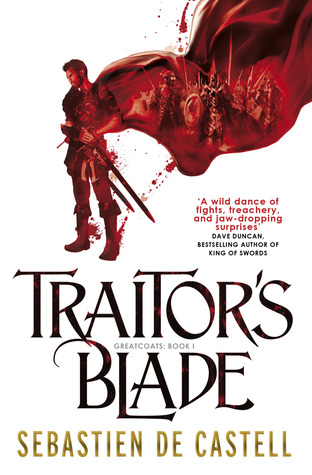
Traitor's Blade was recommended by a fellow Game of Thrones fan. I read somewhere that it was a Three Musketeers style story and that is how I subsequently read it. It's not as gory or unpredictable as GoT, but is an enjoyable read (measured by how quickly I read it). I started at the same time as my son and he read it in about three days. He has taken a break from re-reading Feist's huge collection of books and is road testing Blood Song for me. I enjoy it when we read the same books as there's always a debate to be had.

For the summer, so far I have Snow Child (a recommendation from colleagues), The tent, the bucket and me (perfect for the holidays!) and Blood Song. I have also borrowed Creating Learning without Limits from the library again, though at this point it is the only school book I intend to look at during the summer.

I would love to hear any more recommendations.


*The Time Traveller's Wife is a notable exception. For some reason he came across as more of a weirdo in the film who shows up naked in front of small children.